Written by Anne Lee, EdD, RDN, LD
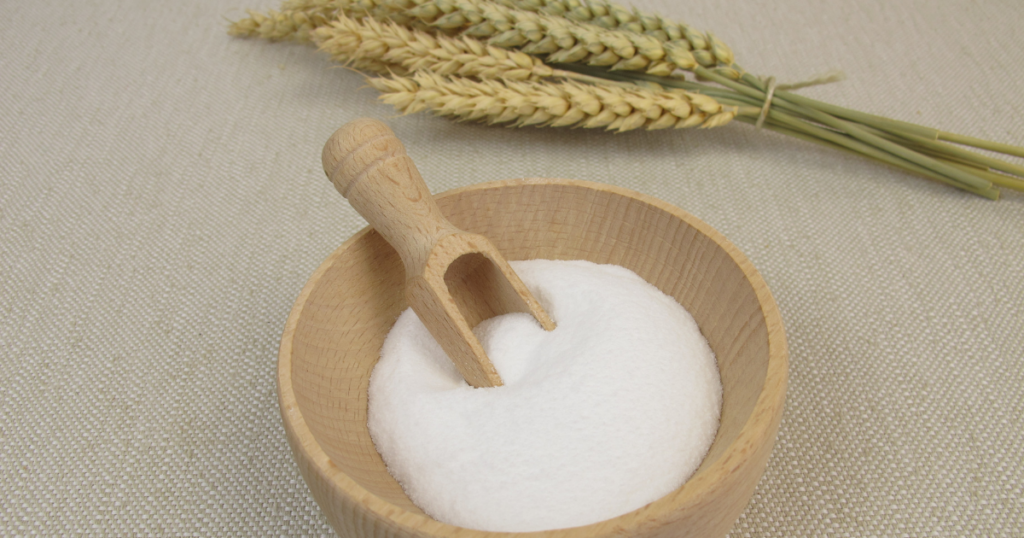
Gluten-free wheat starch has been used in the production of gluten-free foods in Europe for many years and is becoming increasingly common in products sold in the United States. As more gluten-free flour blends, breads, pastries, and other baked goods incorporate this ingredient, many people with celiac disease are asking an important question: Why would a gluten-free product contain wheat?
The answer lies in understanding the difference between regular wheat ingredients and gluten-free wheat starch.
Not All Wheat Starch Is Gluten-Free
It is important to note that not all wheat starch is gluten-free. The ingredient discussed in this article is gluten-free wheat starch, which has been specially processed to remove gluten and must meet FDA requirements for gluten-free foods. Regular wheat starch and conventional wheat-based ingredients should not be assumed to be safe for people with celiac disease.
Why Use Gluten-Free Wheat Starch?
Manufacturers use gluten-free wheat starch because it provides many of the baking properties associated with traditional wheat-based products without contributing significant amounts of gluten. It allows baked products to be moister and form light airy cell structure that provides that flaky or crispness you think of in a croissant or baguette. It can also be used to thicken doughs or sauces to provide a creamy texture. In other words, these functional properties can improve the taste and texture of gluten-free products, helping them more closely resemble their conventional counterparts.
How Can Wheat Starch Be Gluten-Free?
From a regulatory perspective, the FDA allows wheat-derived ingredients to be used in foods labeled “gluten-free” provided the final product contains less than 20 parts per million (ppm) of gluten.
When a product contains gluten-free wheat starch, manufacturers must ensure the finished product meets gluten-free standards. In addition, because the ingredient is derived from wheat, the product must declare wheat as an allergen and include a statement like, “The wheat has been processed to allow this food to meet the Food and Drug Administration requirements for gluten-free foods”.
How Is Gluten-Free Wheat Starch Made?
Gluten-free wheat starch begins as regular wheat flour. Through a series of processing steps, the starch is separated from the gluten proteins.
The process generally works as follows:
- Wheat flour is mixed with water to form a dough.
- The dough is repeatedly washed and processed to separate the starch from the protein components.
- During this process, the gluten proteins are removed while the starch fraction is collected and further refined.
- The starch-rich liquid is then dried into a fine powder.
- The resulting wheat starch is tested to verify that it meets gluten-free standards before being used in gluten-free foods.
This process removes the vast majority of gluten-containing proteins while preserving the functional properties of the starch.
Is Gluten-Free Wheat Starch Safe for People With Celiac Disease?
Current evidence supports the safety of gluten-free wheat starch for individuals with celiac disease when it is used in products that meet FDA gluten-free labeling requirements. However, some individuals may choose to avoid gluten-free wheat starch based on personal preference, prior experiences, or a desire to avoid wheat-derived ingredients altogether. Decisions about whether to include these products in a gluten-free diet should be made based on individual preferences and in consultation with a healthcare provider.
Individuals with a wheat allergy should avoid products containing gluten-free wheat starch. Although the gluten has been removed to levels that meet gluten-free standards, the ingredient is still derived from wheat and may trigger an allergic reaction in people with a wheat allergy.